
Quick Answer
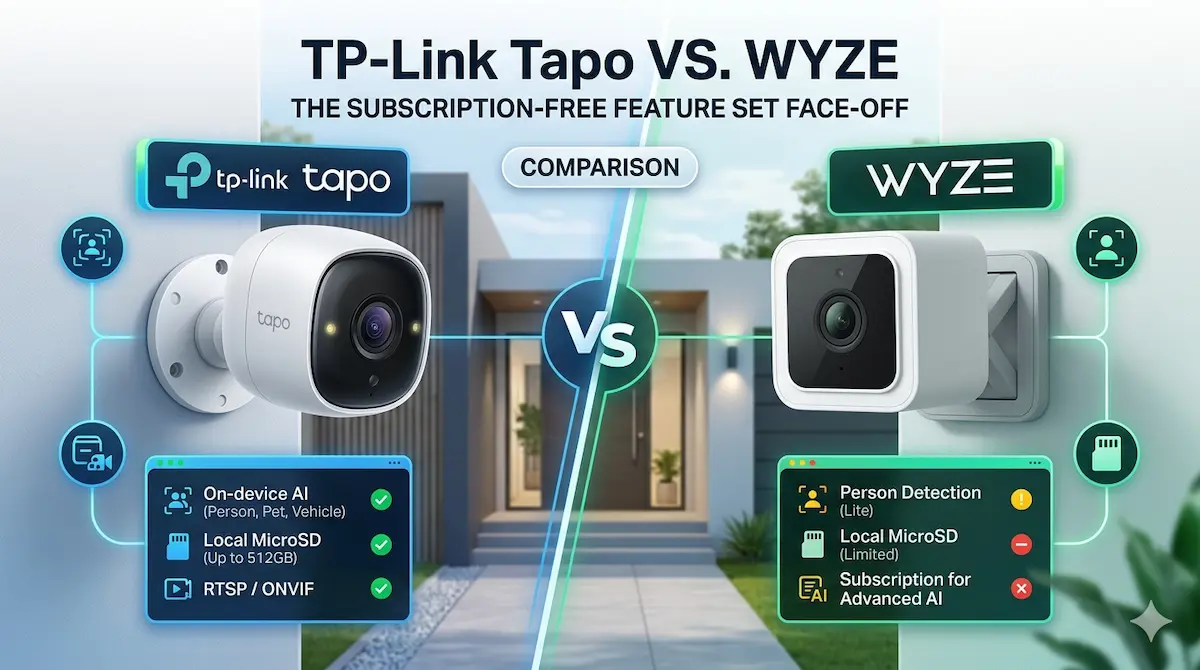
If subscription-free value is the main goal, TP-Link Tapo usually makes the stronger argument today because it tends to leave more practical functionality usable without forcing the buyer quickly into a paid plan. Wyze can still be a strong budget option, especially where local storage is enough for your needs, but its ecosystem often feels more subscription-adjacent. The better choice depends on whether you care most about local recording, smart notifications, or how many useful features remain free in everyday use.
Introduction
Subscription fatigue is one of the main reasons buyers start looking harder at camera ecosystems. It is not that paid plans are always bad. It is that many people want to know what the camera can really do before the monthly bill enters the story.
That is why TP-Link Tapo versus Wyze is such a useful comparison. Both attract price-sensitive buyers. Both are known for consumer-friendly security devices. But they do not always feel equally generous once you start asking what remains genuinely useful without a plan.
| Feature | TP-Link Tapo | Wyze |
| AI Person Detection | Free (On-device) | Subscription (Cam Plus/Lite) |
| Vehicle/Pet Detection | Free (On-device) | Subscription |
| Local Storage | microSD (up to 512GB) | microSD (up to 256GB/512GB) |
| RTSP / ONVIF Support | Standard (Native) | Restricted (Requires hacks/beta) |
| Rich Notifications | Standard (Text) | Subscription (For images) |
| Cooldown Periods | None (Local) | 5-minute (Free tier) |
Best For
- Budget-minded buyers trying to avoid recurring camera fees
- Users who prefer local storage or local-first workflows
- People comparing how usable each app feels without a paid plan
Not Ideal For
- People who already know they want cloud history and advanced paid features
- Buyers expecting any budget ecosystem to give every premium feature away for free
Key Takeaways
- Tapo often feels more generous in practical no-subscription use
- Wyze can still be cost-effective when local storage is enough
- The free experience matters more than the cheapest camera price
- Smart buyers should judge which features remain usable without paying every month
What to Prioritize Before You Buy
Start with your storage model. If local microSD or local hub-based recording is enough, your camera can remain useful without needing cloud history. If you want rich cloud review, long clip history, and premium notifications, your no-subscription expectations may need to be lower.
Second, look beyond the word “free.” A camera can technically work without a subscription and still feel limited in the ways that matter most: notifications, detection detail, clip review, or overall convenience. The right question is not whether the camera boots without a plan. It is whether it still feels worthwhile without one.
Where TP-Link Tapo Has the Better Case
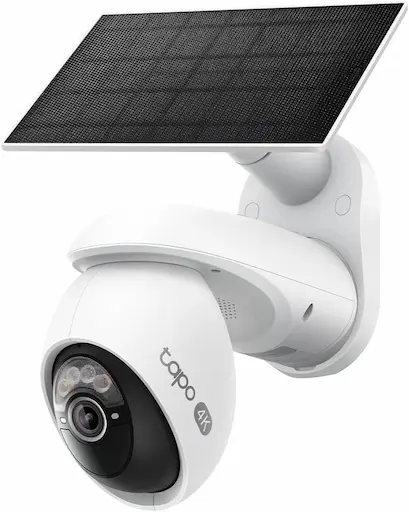
Tapo has the better case when the buyer wants a more generous practical feature set without rushing into a plan. In this comparison, that usually means stronger value around local storage, useful day-to-day detection, and a camera experience that still feels reasonably complete even without cloud add-ons.
That matters because many budget buyers are not anti-subscription in principle. They simply want the camera to remain useful and not feel intentionally hobbled when they choose not to subscribe. Tapo often speaks more directly to that expectation.
Where Wyze Still Makes Sense
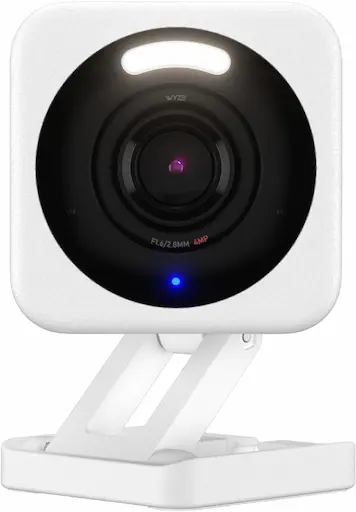
Wyze still makes sense for buyers who want low upfront cost and are comfortable building around local recording where available, or who already accept that some cloud-heavy convenience features may live behind a plan. For certain budget users, that is still a fair trade if the camera price and basic functionality are attractive enough.
The challenge is that buyers looking specifically for the strongest subscription-free story often end up preferring ecosystems that leave more useful features unlocked from the start. That is where Tapo usually feels harder to ignore.
Common Mistakes and Tradeoffs
The biggest mistake is comparing only purchase price. A cheaper camera that feels constrained without a plan may be less satisfying than a slightly more expensive camera that remains useful for years with local storage only. Another mistake is confusing local recording with a full cloud-equivalent experience.
The tradeoff is simple. Wyze often pulls harder on entry price and ecosystem familiarity. Tapo often pulls harder on practical subscription-free value. The better choice depends on what kind of “free” experience you actually expect to live with.
Top Product Recommendations
A Tapo camera with local storage and useful free detection
Best for: Buyers who want the strongest practical no-subscription camera story.
Why it stands out: It often leaves more useful functionality available before a paid plan becomes necessary.
Main limitation: Premium cloud convenience still exists outside the free tier.
A Wyze camera with local storage as the main strategy
Best for: Buyers who care more about low entry price and basic local use than about the richest free app experience.
Why it stands out: It can still be cost-effective when expectations are realistic and local storage covers the main use case.
Main limitation: The free experience may feel more limited if you expect richer cloud-style convenience.
A local-first camera buying habit
Best for: People who want to reduce long-term subscription pressure across the whole house.
Why it stands out: It shifts the buying decision toward cameras that remain useful without recurring cost.
Main limitation: Local-first workflows can demand a bit more setup discipline.
Pros
- Tapo usually offers a stronger subscription-free value story
- Wyze can still be attractive at low entry price
- Both can work when the buyer is honest about what “free” really needs to include
Cons
- Neither ecosystem gives every premium feature away forever
- Local storage and cloud convenience are not the same experience
When DIY May Not Be Enough
If the site needs many cameras, stronger retention, better multi-user review, or more formal incident handling, the decision may need to move beyond budget app comparisons and toward a more deliberate local recording design or recorder-based workflow.
Frequently Asked Questions
Which is better without a subscription?
For many buyers, Tapo usually feels more generous in practical day-to-day use without a paid plan.
Is Wyze still worth buying without a plan?
Yes, especially if local storage and basic viewing are enough for your needs.
What should decide the choice?
Which features remain genuinely useful to you when you stop paying monthly.
Helpful Internal Links
Final Recommendation
If you hate recurring fees, buy the camera that still feels useful when the cloud upsell disappears. In this comparison, that usually makes Tapo the more persuasive subscription-free choice.