
Quick Answer
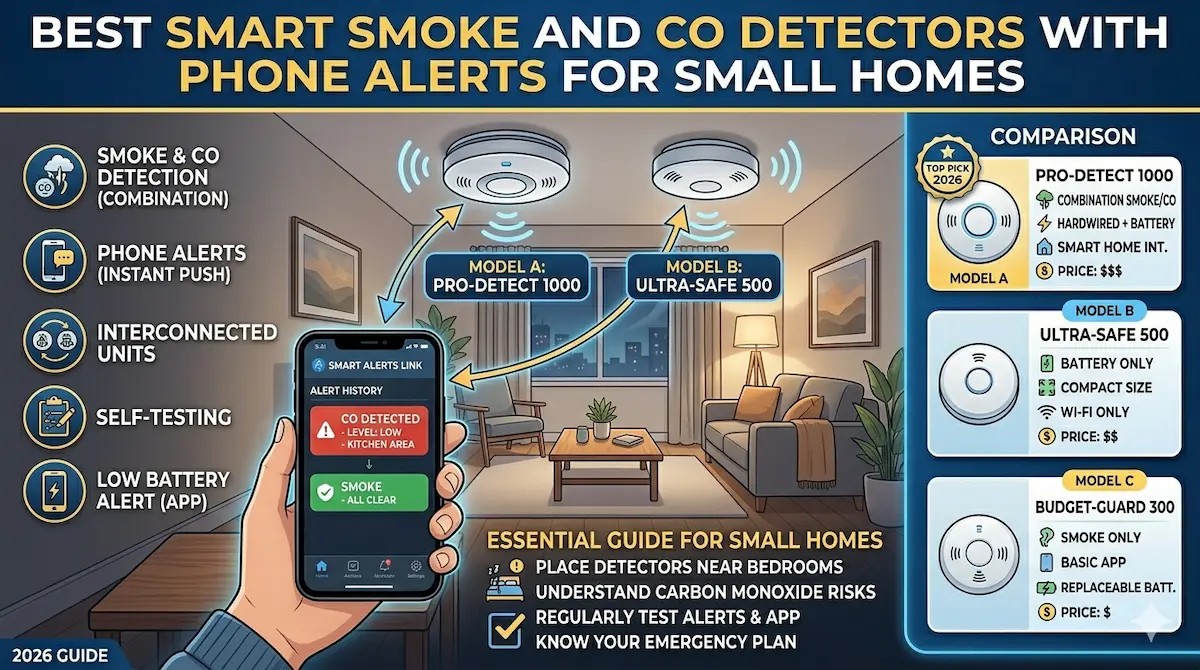
For small homes, smart smoke and CO detectors with phone alerts offer compact designs and reliable notifications. Look for models with long battery life, easy installation, and compatibility with major smart home platforms. Avoid overly complex systems that may not suit limited space.
In small homes, space efficiency and reliability are critical when choosing smoke and CO detectors. Smart models with phone alerts provide peace of mind by sending warnings directly to your smartphone. These detectors often feature compact designs, low power consumption, and seamless integration with home automation systems, making them ideal for apartments, studios, and small households.
Best For
- small apartments
- dorm rooms
- home offices
Not Ideal For
- large open spaces
- areas with high humidity
Key Takeaways
- Prioritize detectors with long battery life and low false alarm rates
- Choose models with compact, unobtrusive designs
- Ensure compatibility with your smartphone's operating system
- Look for detectors that integrate with existing smart home ecosystems
Why Smart Smoke and CO Detectors Matter for Small Homes
Small homes often have limited space, making it easier for smoke or carbon monoxide to accumulate undetected. Traditional detectors may lack the connectivity and advanced features needed for modern living. Smart detectors, however, offer real-time alerts via smartphone apps, allowing homeowners to monitor conditions remotely and receive immediate notifications in emergencies.
These devices also integrate with other smart home systems, such as voice assistants or security cameras, creating a cohesive safety network. For small spaces, compact designs and multi-room coverage are essential to ensure no area is left unprotected. Choosing the right detector can mean the difference between early warning and catastrophic loss.
Key Features to Prioritize When Buying
When selecting a smart smoke and CO detector for a small home, prioritize battery life, alert reliability, and app integration. Look for models with long-lasting batteries or hardwired options to avoid frequent replacements. Detectors with dual-sensor technology (combining smoke and CO detection) are ideal for maximizing coverage without cluttering limited space.
Phone alerts via Wi-Fi or cellular networks are critical for remote monitoring. Ensure the app provides customizable notifications, voice alerts, and the ability to silence false alarms. Compatibility with popular smart home platforms like Alexa or Google Home can also enhance usability. Lastly, consider models with easy installation and minimal false alarm rates to avoid unnecessary stress.
Common Mistakes and Limitations to Avoid
Many homeowners overlook the importance of proper placement, which can render even the best detectors ineffective. For example, installing a detector too close to a kitchen may trigger false alarms from steam or cooking fumes. Similarly, relying solely on battery-powered units without a backup power source can leave you vulnerable during outages.
Another common pitfall is assuming all smart detectors work seamlessly with existing home systems. Some models may require a hub or specific Wi-Fi standards, which could complicate setup. Additionally, while cellular-connected detectors offer reliability, they often come at a higher cost. Weighing these tradeoffs is essential for small homes with budget constraints.
Balancing Cost, Coverage, and Connectivity
Smart detectors vary widely in price, from budget-friendly options to premium models with advanced features. While cheaper units may suffice for basic needs, they might lack features like voice alerts or multi-room coverage. For small homes, investing in a mid-range detector with reliable connectivity and a proven track record can provide better value over time.
Consider whether your home’s electrical system supports hardwiring, as this can eliminate battery concerns. However, wireless models offer greater flexibility for renters or those with older homes. Ultimately, the goal is to find a detector that balances affordability, coverage, and seamless integration with your lifestyle and existing smart devices.
Top Product Recommendations
Nest Protect
Best for: Homeowners seeking seamless integration with Google Home
Why it stands out: Offers voice alerts, Wi-Fi connectivity, and compatibility with other Nest devices. Its sleek design fits well in small spaces, and the app provides detailed alerts and silencing options.
Main limitation: Requires a Google account and Wi-Fi; not ideal for renters due to hardwiring needs.
First Alert Onelink Smoke & CO Alarm
Best for: Budget-conscious buyers needing cellular backup
Why it stands out: Uses cellular connectivity for reliable alerts even during power outages. Its compact size and dual-sensor technology make it suitable for small homes.
Main limitation: Higher monthly subscription fee for cellular service; limited third-party app integration.
Kidde Smart Smoke Alarm
Best for: Users prioritizing long-term reliability
Why it stands out: Features a 10-year sealed battery, reducing maintenance needs. It works with Alexa and Google Assistant and has a low false alarm rate.
Main limitation: No CO detection in some models; limited app customization compared to competitors.
Pros and Cons
Pros
- Real-time phone alerts for smoke and CO leaks
- Easy installation without wiring
- Compact size suitable for limited spaces
Cons
- Battery replacement required periodically
- Limited range compared to hardwired systems
When DIY May Not Be Enough
Consider upgrading if your current detectors are over 10 years old, frequently trigger false alarms, or lack smartphone integration. Also, upgrade if you need additional coverage in newly renovated spaces or if moving to a larger home.
Helpful Internal Links
Helpful External Resources
Frequently Asked Questions
Do smart detectors work without Wi-Fi?
Some models use cellular networks for alerts, but most require Wi-Fi. Always check the product specs to confirm connectivity options.
Can these detectors integrate with other smart home systems?
Yes, many work with Alexa, Google Home, and Apple HomeKit. However, integration capabilities vary by brand and model.
How long do batteries last in smart detectors?
Battery life ranges from 5 to 10 years, depending on the model. Hardwired or cellular-connected units may have different power requirements.
Are there false alarm issues with smart detectors?
False alarms are rare but possible, especially in kitchens. Look for models with advanced sensors and customizable sensitivity settings to minimize disruptions.
Final Recommendation
Smart home products can improve convenience and basic protection, but they are not always enough for layered security. If your needs grow beyond simple automation, a more deliberate security design may be the better next step.