
Quick Answer
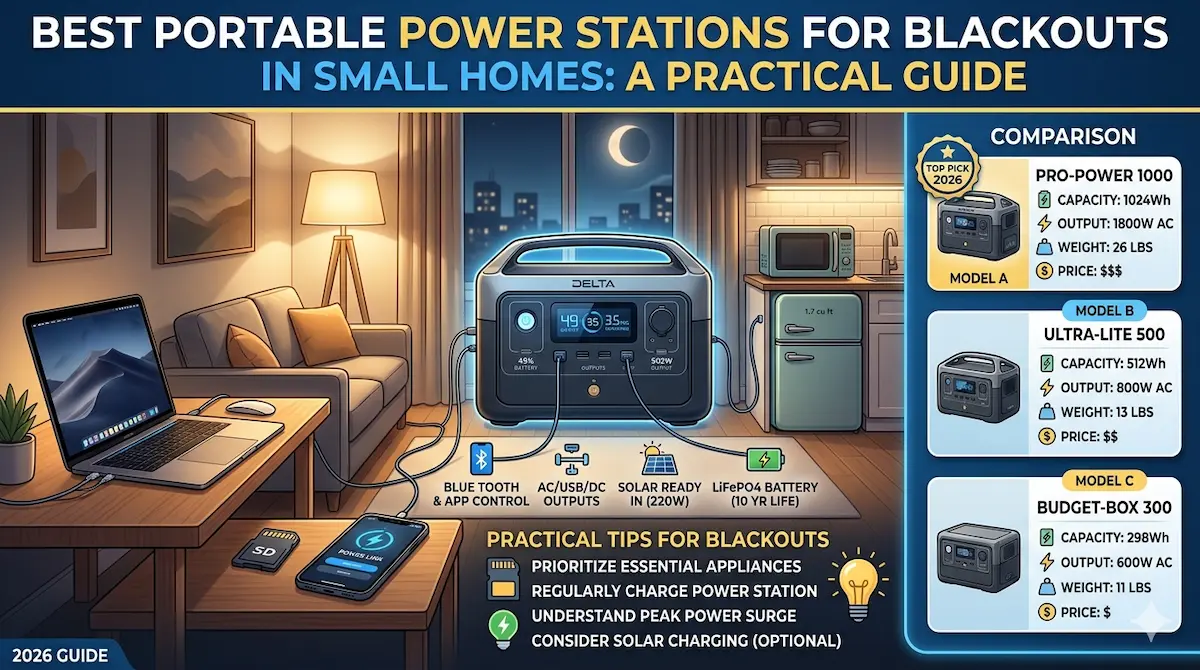
When choosing portable power stations for small home blackouts, prioritize compact designs with sufficient wattage to power essential appliances. Look for models with long battery life, multiple charging options, and compatibility with devices like refrigerators or medical equipment. Avoid overcomplicating your setup—focus on reliability and ease of use for real-world scenarios.
Blackouts in small homes can disrupt daily life, making a dependable portable power station essential. Whether you're preparing for emergencies or living off-grid, the right unit ensures critical devices stay operational. This guide focuses on practical solutions tailored to small spaces and modest energy needs, avoiding unnecessary features that complicate usability.
Best For
- Small homes with limited energy needs
- Off-grid living in remote areas
- Emergency preparedness for short-term outages
Not Ideal For
- Large households requiring high wattage
- Frequent power outages needing extended runtime
Key Takeaways
- Choose units with 1000-2000Wh capacity for essential appliances
- Opt for lightweight, foldable designs for easy storage
- Verify compatibility with your home's critical devices
- Prioritize models with solar charging for sustainability
Why Portable Power Stations Matter for Small Homes
During blackouts, small homes often face unique challenges due to limited space and reliance on essential appliances. Portable power stations provide a compact, reliable solution to keep lights, refrigeration, and communication devices running without requiring permanent installations.
These units are especially valuable for small homes because they can be stored easily and deployed quickly. Unlike traditional generators, they operate silently and emit no fumes, making them safer for indoor use and more neighbor-friendly.
Key Factors to Prioritize When Buying
When selecting a portable power station for small home blackouts, focus on wattage capacity, battery life, and portability. Ensure the unit can power your most critical devices, such as refrigerators, lights, and medical equipment, without overloading.
Look for models with multiple output ports (USB, AC, DC) and compatibility with solar panels for extended use. Weight and size are also crucial—choose a unit that’s easy to move but still powerful enough for your needs.
Common Mistakes and Tradeoffs to Avoid
Many users underestimate the power requirements of their appliances, leading to underperforming units. Always check the wattage of your devices and add a buffer for unexpected demands.
Opting for the cheapest option can result in poor battery life or unreliable performance. Balance cost with quality, and avoid models with vague specifications or lack of safety certifications like UL or CE.
How to Choose Based on Your Needs
Consider your blackout frequency and duration. If outages are rare but severe, a high-capacity unit may be overkill. For frequent or prolonged blackouts, prioritize models with expandable battery packs or solar charging capabilities.
Also, think about your home’s layout. Units with foldable handles or wheels are easier to store in tight spaces. If you have sensitive electronics, choose a power station with stable voltage output to prevent damage.
Top Product Recommendations
Goal Zero Yeti 1200
Best for: Essential appliances and short-term blackouts
Why it stands out: Offers 1,200Wh of power, supports solar charging, and has multiple ports for simultaneous device use.
Main limitation: Heavier than some competitors and lacks built-in USB-C ports.
Jackery Explorer 1000
Best for: Compact, lightweight solutions for small spaces
Why it stands out: Weighs just 11.5 lbs and includes a built-in LCD screen for real-time power monitoring.
Main limitation: Lower wattage capacity compared to larger models, limiting use for high-power devices.
EcoFlow Delta 1300
Best for: Long-term blackouts and heavy power demands
Why it stands out: Delivers 1,300Wh with fast charging via AC or solar, and includes a built-in inverter for seamless power transitions.
Main limitation: Higher price point and bulkier design, less ideal for storage in very small spaces.
Pros and Cons
Pros
- Reliable power during outages
- Compact and easy to store
- Multiple outlet types for versatility
Cons
- Higher cost for premium models
- Limited capacity for heavy-duty appliances
When DIY May Not Be Enough
Consider upgrading if your household grows, if you need to power large appliances like air conditioners, or if you require solar compatibility for extended off-grid use. Look for models with 3000Wh+ capacity and advanced battery management systems when higher demands arise.
Helpful Internal Links
Helpful External Resources
Frequently Asked Questions
How long can a portable power station last during a blackout?
Battery life depends on the unit’s capacity and the appliances used. A 1,000Wh station might power a refrigerator for 12–24 hours, but higher-wattage devices will drain it faster.
Can portable power stations power an entire home?
Most portable stations are designed for essential devices only. Full-home backup typically requires larger systems or multiple units combined with solar panels and battery banks.
Are portable power stations safe to use indoors?
Yes, unlike generators, they produce no emissions or fumes. However, ensure proper ventilation if using in enclosed spaces and avoid overloading circuits.
Final Recommendation
Off-grid and backup-oriented products can work very well when matched to the right environment. If your site is remote, harsh, or mission-critical, it is worth thinking beyond entry-level DIY solutions.