
Quick Answer
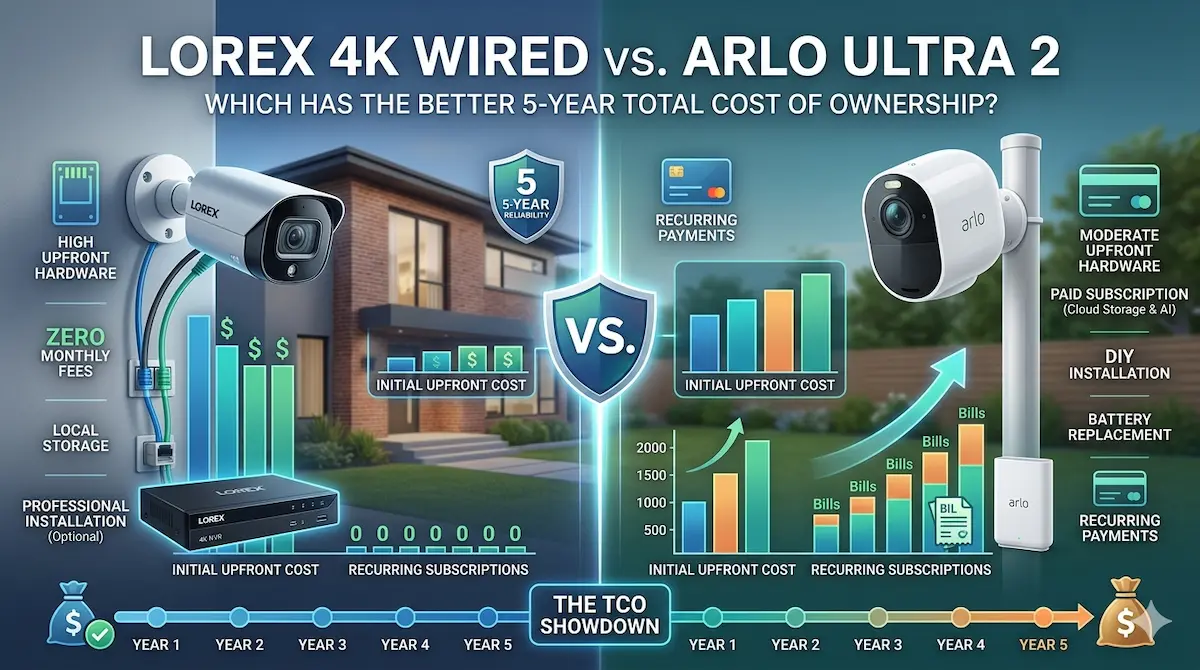
In many five-year scenarios, a wired Lorex-style 4K system has the stronger total cost of ownership case if you can accept the installation work upfront. Arlo Ultra 2 often has the stronger convenience case, but subscription pressure, battery maintenance, and accessory dependency can make long-term ownership more expensive than it first appears. The better value depends on whether you want easier setup now or lower friction later.
Introduction
Total cost of ownership is where many security camera comparisons become more honest. Buyers often compare the box price and stop there. That hides the costs that show up later: charging, subscriptions, accessories, replacement batteries, installation labor, and the operational friction of living with the system for years.
| Cost Component | Lorex 4K Wired (NVR) | Arlo Ultra 2 (Wireless) |
| Upfront Hardware | $590 – $830 | $650 |
| Professional Installation | $400 – $800 (Optional) | $0 (Usually DIY) |
| Subscription (5 Years) | $0 (Local Storage) | $780 ($13/mo Secure Plan) |
| Replacement Batteries | $0 (Wired) | $150 – $200 (Estimated) |
| Total 5-Year Cost (DIY) | ~$600 – $850 | ~$1,430 |
That is exactly why this comparison matters. A wired 4K system and a premium wireless 4K system are not just different products. They are different ownership models. One often asks more from you on day one. The other often asks more from you over time.
Best For
- Buyers comparing long-term value rather than only purchase price
- Homeowners deciding between wired permanence and wireless convenience
- Users trying to understand five-year ownership, not just launch-day impressions
Not Ideal For
- People who only want the cheapest first purchase
- Buyers who will never tolerate wired installation work under any circumstances
Key Takeaways
- Wired systems often cost more in effort upfront but less in recurring friction
- Wireless premium systems often look easier early but can cost more over time
- Subscriptions and battery maintenance are major TCO factors
- The better five-year choice depends on your tolerance for installation versus maintenance
What to Prioritize Before You Compare Cost
Start with ownership model, not only image quality. A wired system often means cable planning, recorder placement, and a larger upfront installation burden. A wireless system often means batteries, charging cycles, optional subscription pressure, and more dependency on the vendor’s ecosystem over time.
Second, think in five-year behavior, not five-minute setup. If you know you dislike regular charging, accessory replacement, or managing recurring service add-ons, those annoyances belong in the cost picture just as much as dollars do. Operational friction is part of ownership cost even when it does not appear on the receipt immediately.
Where Wired Lorex-Style Systems Win
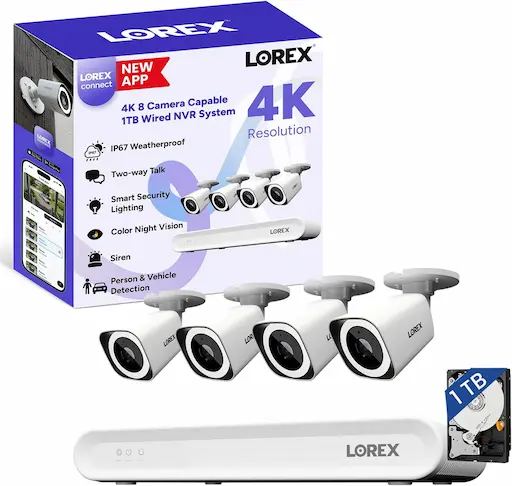
Wired 4K systems usually win on persistence. Once the infrastructure is in place, they generally avoid many of the recurring maintenance issues that battery-first systems introduce. That matters over five years because the boring costs of ownership are often what make people resent a system, not the initial install.
This is especially true if local recording is central to the design and the cameras are expected to behave more like permanent infrastructure than like convenient accessories. Wired systems often feel more expensive upfront but less fragile as a long-term surveillance habit.
Where Arlo Ultra 2 Still Makes the Stronger Case
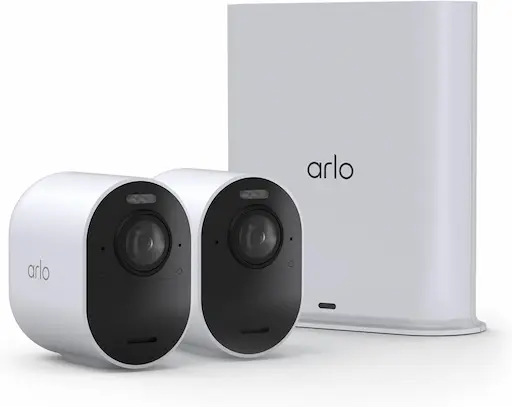
Arlo Ultra 2 still makes a strong case when easy deployment and cleaner installation matter more than permanent infrastructure. For some buyers, avoiding cable work is worth a lot. Wireless premium cameras can also make sense for sites where mounting flexibility matters more than always-on wired behavior.
The challenge is that convenience can become expensive over time. If a system depends on subscriptions for preferred features or on battery care for smooth daily use, the five-year ownership story can look different from the store shelf story. That does not make the wireless system bad. It simply means the buyer should price convenience honestly.
Common Mistakes and Tradeoffs
The biggest mistake is treating convenience as free. Another mistake is treating cable installation as only a burden instead of as an investment in lower-maintenance operation later. Both sides of this comparison have costs. They just show up at different times.
The tradeoff is simple. Wired systems front-load the pain. Premium wireless systems often spread the pain out over time. The better TCO depends on which kind of cost you would rather absorb.
Top Product Recommendations
A wired 4K Lorex-style system
Best for: Buyers who want lower long-term operational friction and more permanent infrastructure.
Why it stands out: It often rewards the owner over time once the installation work is done.
Main limitation: Higher installation effort and less flexibility after deployment.
Arlo Ultra 2
Best for: Buyers who value premium wireless convenience and easier early deployment.
Why it stands out: It reduces installation friction and suits buyers who prioritize quick deployment.
Main limitation: Long-term cost can rise through recurring maintenance and ecosystem dependency.
A mixed approach
Best for: Properties that want wired permanence in core areas and wireless flexibility at the edges.
Why it stands out: It treats different surveillance zones according to their real installation and maintenance needs.
Main limitation: More complexity than committing to one system style.
Pros
- Wired systems often age better operationally
- Wireless premium systems reduce early installation friction
- A five-year view exposes the real cost structure more honestly
Cons
- Wired systems demand more upfront effort
- Wireless convenience can become more expensive over time than buyers expect
When DIY May Not Be Enough
If the property is large, the camera count is high, or the surveillance role is critical, a true total-cost comparison may need installation planning, recorder strategy, and long-term support considerations that go beyond a simple product-vs-product debate. At that point, the system design matters more than the box label.
Frequently Asked Questions
Which is cheaper over five years?
Often the wired system, if you can absorb the installation effort upfront. But that depends on whether the wireless system’s convenience and flexibility are worth the long-term maintenance pattern.
Is Arlo Ultra 2 a bad value?
No. It can be a strong value when quick deployment and premium wireless flexibility matter more than long-term infrastructure efficiency.
Is wired always better?
No. Wired is often stronger for long-term stability, but some properties and users genuinely benefit more from wireless convenience.
Helpful Internal Links
Final Recommendation
If you care most about lower long-term friction, wired still has the stronger TCO argument. If you care most about fast deployment and flexible placement, the premium wireless path may still be worth the extra long-term cost. Buy for the ownership model you actually want to live with.