
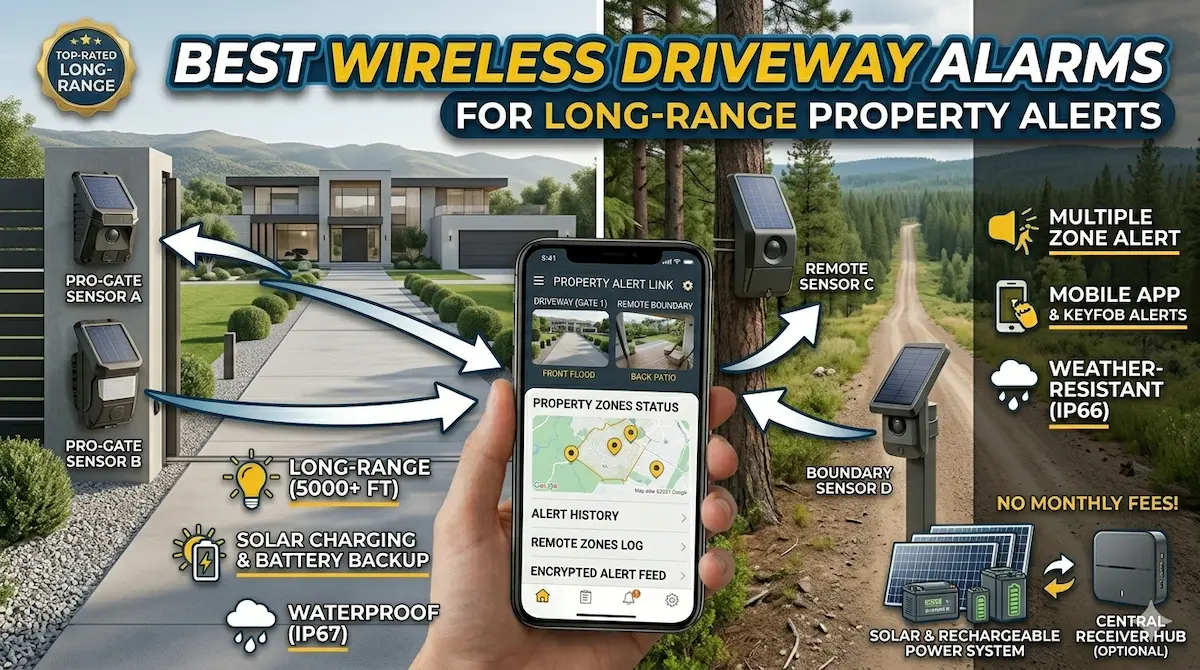
Quick Answer
For reliable long-range property alerts, prioritize wireless driveway alarms with 1-2 mile range, weatherproof durability, and smartphone integration. Look for models with adjustable sensitivity and low battery alerts. Avoid overly complex systems that require professional installation.
Long-range wireless driveway alarms offer a convenient way to monitor property activity without wiring. These systems use radio frequency or cellular networks to detect vehicles and send alerts to your phone. Whether you're protecting a rural estate or a suburban home, the right alarm can provide peace of mind. Key factors include range, battery life, and compatibility with existing security systems.
Best For
- Homeowners with large properties
- Rural or remote locations
- Frequent property visitors
Not Ideal For
- Small urban lots with limited space
- Users needing immediate alert systems
Key Takeaways
- Prioritize systems with 1+ mile range
- Choose models with solar-powered options
- Verify compatibility with smart home platforms
- Opt for weather-resistant enclosures
Why Long-Range Wireless Driveway Alarms Matter for Property Security
Long-range wireless driveway alarms are essential for homeowners seeking reliable alerts about vehicle or pedestrian activity near their property. These systems use advanced radio frequencies to detect motion and trigger alerts, even when traditional wired systems are impractical.
Their wireless design eliminates the need for complex installations, making them ideal for rural or large properties. However, choosing the right model requires understanding key factors like range, battery life, and compatibility with existing security systems.
Key Factors to Prioritize When Buying
When selecting a long-range wireless driveway alarm, prioritize range capabilities. Look for systems that guarantee coverage up to 1,000 feet or more, especially if your property has obstacles like trees or hills.
Battery life is equally critical. Opt for models with solar charging or long-lasting batteries to minimize maintenance. Additionally, ensure the alarm integrates with smart home platforms like Alexa or Google Home for centralized control.
Common Mistakes and Tradeoffs to Avoid
Many users overlook the importance of signal interference. Placing sensors near metal structures or power lines can weaken performance. Always test the system in your specific environment before finalizing a purchase.
Another pitfall is assuming all long-range alarms offer the same features. Some models may lack night vision, weather resistance, or mobile app notifications. Weigh these tradeoffs based on your property’s unique needs.
Setting Up for Optimal Performance
Proper placement is crucial for maximizing range. Install sensors at the property’s perimeter, avoiding direct line-of-sight obstructions. Pairing multiple units can create overlapping coverage zones for better detection.
Ensure your Wi-Fi network supports the alarm’s connectivity requirements. If signal strength is weak, consider using a mesh network extender to maintain consistent communication between the alarm and your smartphone.
Top Product Recommendations
Ring Stick Up Cam
Best for: Large properties with diverse terrain
Why it stands out: Offers 1,500-foot range and 24/7 video monitoring with motion detection
Main limitation: Higher price point and requires a Ring account for full features
Arlo Pro 4
Best for: Users prioritizing weather resistance and night vision
Why it stands out: IP65-rated durability and 1,000-foot range with color night vision
Main limitation: Battery life is shorter than some competitors during heavy use
Lorex LNR200
Best for: Budget-conscious buyers needing basic alerts
Why it stands out: Affordable option with 1,200-foot range and solar-powered charging
Main limitation: Limited app features and lacks video recording capabilities
Pros and Cons
Pros
- No wiring required for installation
- Detect vehicles and pedestrians
- Mobile app notifications available
Cons
- Higher cost than basic motion sensors
- Limited customization options
When DIY May Not Be Enough
Consider upgrading if your current system has inconsistent range, frequent false alerts, or lacks smartphone integration. Look for newer models with improved battery efficiency and AI-driven detection algorithms if you frequently encounter false positives from animals or weather conditions.
Helpful Internal Links
Helpful External Resources
Frequently Asked Questions
How long do batteries last in long-range driveway alarms?
Battery life varies by model, but most last 6–12 months on a single charge. Solar-powered units typically require less frequent maintenance.
Can these alarms work through walls or fences?
No, wireless signals weaken through solid obstacles. For optimal performance, install sensors in open areas with clear line-of-sight.
Are long-range alarms compatible with existing security systems?
Many models integrate with smart home platforms, but compatibility depends on the system's protocols. Check for Zigbee, Z-Wave, or Wi-Fi support.
Final Recommendation
A practical wireless setup can solve many entry-level security needs, especially in apartments and rentals. If your property needs wider coverage, stronger reliability, or a more complete design, that is usually the point where a professionally planned system makes more sense.